Source Luxurious Wooden Jewelry Box for Storage, Gift, Collection
Compare 30 listings of luxurious wooden jewelry box options featuring various sizes, colors, and opening styles. Buyers can evaluate customization, packaging, and lead times for storage, gift, and collection needs; compare the available evidence and request quotations based on your requirements.
Key considerations
Products List




Comprehensive Sourcing Guide
Luxurious Wooden Jewelry Box Sourcing Guide
Sourcing high-end wooden jewelry boxes requires a nuanced understanding of material integrity, aesthetic customization, and functional design. Buyers must navigate a market where "luxury" is defined by finish quality, hardware durability, and structural stability. The following guide outlines the critical verification steps for procurement professionals seeking to source these items from international suppliers, ensuring that the final product meets both brand standards and logistical requirements.
Product Scope and Observed Listing Signals
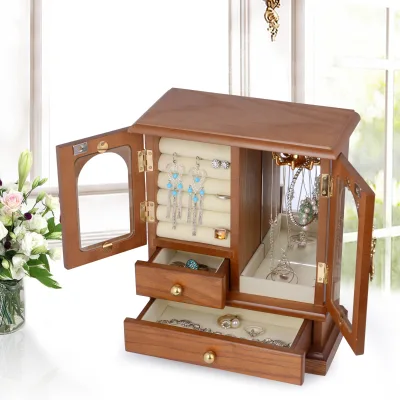
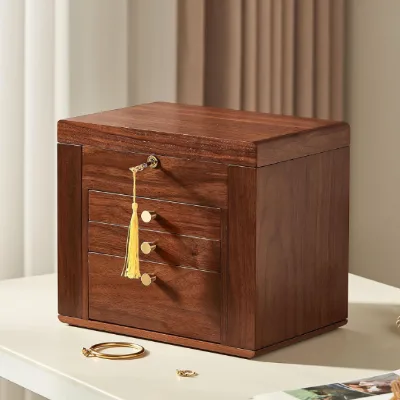
The current market landscape for wooden jewelry storage reveals a diverse range of configurations, primarily categorized by shape, opening mechanism, and internal layout. Observed listings indicate a strong preference for rectangular and square forms, with clamshell and drawer-style openings being the most prevalent. These structural choices directly impact the user experience, with clamshell designs offering broad visibility and drawer mechanisms providing secure, tiered organization. Buyers should note that while many products are labeled as "luxury," the actual construction varies significantly between single-layer and multi-layer internal arrangements, necessitating careful review of product models such as SH-22, SH-65, and the NDM series to align with specific storage needs.
Color and material composition are equally critical signals in this category, with brown and black wood finishes dominating the luxury segment, alongside white options for modern aesthetics. The primary material is consistently identified as wood, often treated to achieve a partial hardness that balances durability with ease of carving or finishing. Applications extend beyond simple storage to include gift packaging, collection display, and household organization, suggesting that buyers should evaluate the box’s role in their broader supply chain. Whether intended for tea, candy, or general household use, the versatility of these boxes allows for cross-category marketing, but the specific usage dictates the required internal padding and compartmentalization.
Technical Specifications to Verify
Technical verification begins with precise dimensional analysis, as observed sizes range from compact units like 23 * 9 * 9 cm to larger, more substantial boxes. Buyers must confirm whether the supplier offers standard sizes or supports extensive customization, as many listings indicate "various sizes" or specific model-based dimensions. The opening mechanism is a key technical differentiator; while some models feature simple open tops or button fasteners, others utilize complex drawer systems or clamshell hinges. These mechanical elements must be tested for smooth operation and long-term reliability, as failure in the opening mechanism can severely detract from the perceived luxury of the product.
Internal functionality and packaging standards also require rigorous scrutiny. Multi-layer designs offer enhanced organization but add weight and complexity, whereas single-layer boxes are simpler but may lack premium appeal. The external packaging, whether standard cartons, individual boxes, or two-piece carton sets, must be evaluated for its ability to protect the product during transit. Additionally, the printing specifications, such as all-side printing capabilities, allow for extensive branding opportunities. Buyers should verify that the supplier can consistently reproduce logos and designs across different wood grains and colors without compromising the structural integrity of the box or the clarity of the printed elements.
Compliance and Safety Documentation
While specific certification statuses like FSC are mentioned in background data, buyers must independently verify the legal and safety compliance of all wooden materials used in production. This includes ensuring that the wood is sourced from sustainable forests and that any finishes, glues, or paints used are free from harmful volatile organic compounds (VOCs). Since these boxes are often used for storing personal items or gifts, compliance with international safety standards for consumer goods is essential. Buyers should request material safety data sheets (MSDS) and proof of origin to mitigate risks associated with illegal logging or hazardous material usage, particularly when sourcing from regions with varying regulatory enforcement.
Waterproofing and environmental resistance are also critical compliance factors, especially if the boxes are intended for humid environments or outdoor display. Most observed products are noted as "not waterproof," which limits their applicability in certain storage conditions. Buyers must clearly communicate environmental requirements to suppliers to ensure that the chosen wood treatment and finish can withstand the intended use case. Furthermore, any claims regarding hardness or durability must be backed by standardized test results, ensuring that the "partial hardness" or other structural claims meet the buyer’s quality expectations and do not lead to premature product failure or customer complaints.
Cost Drivers and Commercial Terms
Cost structures for wooden jewelry boxes are heavily influenced by customization levels, material quality, and order volume. The observed minimum order quantities (MOQ) range from 3 to 1000 units, with higher volumes often unlocking better pricing tiers. Buyers should anticipate that custom designs, specific color matches, or unique opening mechanisms will incur additional setup fees and higher per-unit costs. The payment terms, typically structured as a 30% deposit with a 70% balance before shipping, are standard in the industry but require careful cash flow management. Understanding these financial commitments is crucial for maintaining healthy supplier relationships and ensuring timely production starts.
Lead times are another significant cost driver, with sample production taking 5-7 days and bulk production ranging from 25-35 days. These timelines can extend further during peak seasons or if complex customizations are involved. Buyers must factor in shipping costs and delivery terms, which can include sea, air, or courier services, depending on urgency and volume. Sea freight is cost-effective for large orders but requires longer planning horizons, while air freight offers speed at a premium. Clear communication regarding delivery deadlines and potential delays is essential to avoid stockouts or missed market opportunities, ensuring that the procurement schedule aligns with sales and marketing campaigns.
Supplier Qualification and Quality Control
Supplier qualification should focus on verifying manufacturing capabilities, quality control processes, and past performance in producing luxury-grade wooden goods. Buyers must assess whether the supplier has the infrastructure to handle custom orders, including specialized woodworking machinery and skilled labor for intricate finishes. Quality control checks should include inspections of wood grain consistency, finish smoothness, hardware durability, and packaging integrity. Requesting pre-shipment samples is a critical step to validate that the final product matches the approved prototype in terms of color, size, and functionality. This step helps identify potential discrepancies early, allowing for corrective actions before bulk production begins.
Additionally, buyers should evaluate the supplier’s responsiveness and communication efficiency, as these factors significantly impact the sourcing experience. A qualified supplier should provide clear documentation, timely updates on production status, and proactive solutions to any issues that arise. Building a relationship with a reliable supplier ensures consistency in product quality and reduces the risk of supply chain disruptions. Buyers should also consider the supplier’s ability to scale production up or down based on market demand, ensuring flexibility in managing inventory levels and meeting fluctuating customer needs without compromising on quality or delivery timelines.
Long-Term Procurement Checks
Long-term procurement success depends on establishing robust performance metrics and regular supplier audits to ensure continuous improvement. Buyers should track key performance indicators such as on-time delivery rates, defect rates, and customer feedback on product quality. Regular audits, whether on-site or virtual, help verify that the supplier maintains consistent quality standards and adheres to agreed-upon specifications. These checks also provide opportunities to discuss new design trends, material innovations, or cost-saving opportunities, fostering a collaborative partnership that benefits both parties. Continuous monitoring ensures that the supplier remains aligned with the buyer’s evolving brand standards and market expectations.
Furthermore, buyers should periodically review the total cost of ownership, including shipping, duties, and potential returns, to identify areas for optimization. Diversifying the supplier base can mitigate risks associated with single-source dependencies, ensuring business continuity in case of disruptions. Staying informed about industry trends, such as sustainable sourcing practices or new finishing technologies, allows buyers to proactively adapt their procurement strategies. By maintaining a strategic approach to supplier management and quality assurance, buyers can secure a reliable supply of high-quality wooden jewelry boxes that enhance their brand value and customer satisfaction over the long term.
FAQs
What customization options are available for these wooden boxes?
Customization is available for these luxury wooden jewelry boxes. Buyers can request specific sizes, colors, and styles to match their brand identity. The products support various shapes like rectangles and squares, allowing for tailored packaging solutions that meet unique design requirements and storage needs.
What are the lead times for sample and production?
The sample lead time is typically 5-7 days. Production lead time ranges from 25-35 days after deposit confirmation. Delivery terms include sea, air, or courier options, with total delivery time within 35 days. These timelines ensure efficient sourcing for bulk orders and urgent requirements.
What is the minimum order quantity for these boxes?
The minimum order quantity is 1000 pieces. This MOQ applies to standard luxury wooden jewelry box orders. Buyers should consider this threshold when planning inventory. The supplier accepts a 30% deposit and 70% balance before shipping, facilitating secure transactions for bulk procurement of these storage and gift boxes.
What materials and styles are used in these boxes?
These boxes are crafted from wood, offering a luxury style suitable for jewelry storage. They come in various colors including brown, white, and black. The designs feature rectangle or square shapes with clamshell or drawer opening ways. This material ensures durability while providing an elegant appearance for collection and gift purposes.
How are these boxes packaged for shipping?
Packaging varies by model, with options including 2 pieces per carton, standard packaging, or individual boxes. The products are designed for storage, packing, and collection. This flexible packaging approach protects the wooden boxes during transit. Buyers can select packaging methods that best suit their logistics needs and product protection requirements.